As an indie builder, a marketer by training, I'm obsessed with dashboards, data, and automation, I didn’t just want to watch the market, I wanted to build one myself.
Maybe it comes from being a marketer who lives for numbers. Maybe it’s from teaching myself tech without a formal background. Or maybe it’s just that some screens have a magnetic pull that never lets go.
For me, that screen was always the same one: The Terminal.
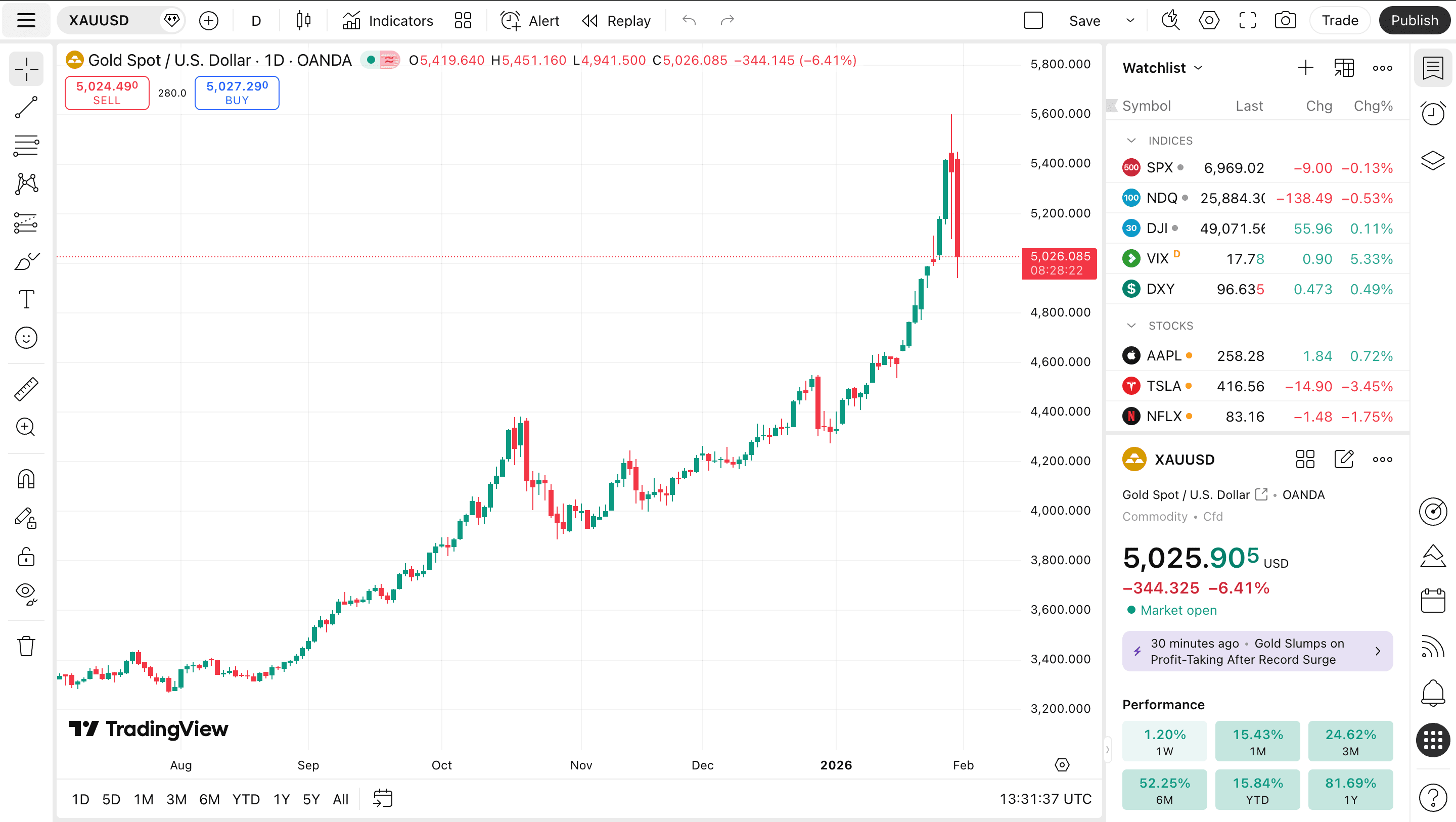
That hypnotic glow of red and green bars dancing across a black screen—the digital pulse of the global economy, numbers moving in real time, charts quietly reflecting the digitized pulse of the global economy. Stocks, crypto, forex — the visual language of money. Dashboards weren’t just useful to me — they were magnetic.
And the more I stared at them, the more one thought kept coming back:
Why am I only using platforms someone else built?
The idea that became WOWS
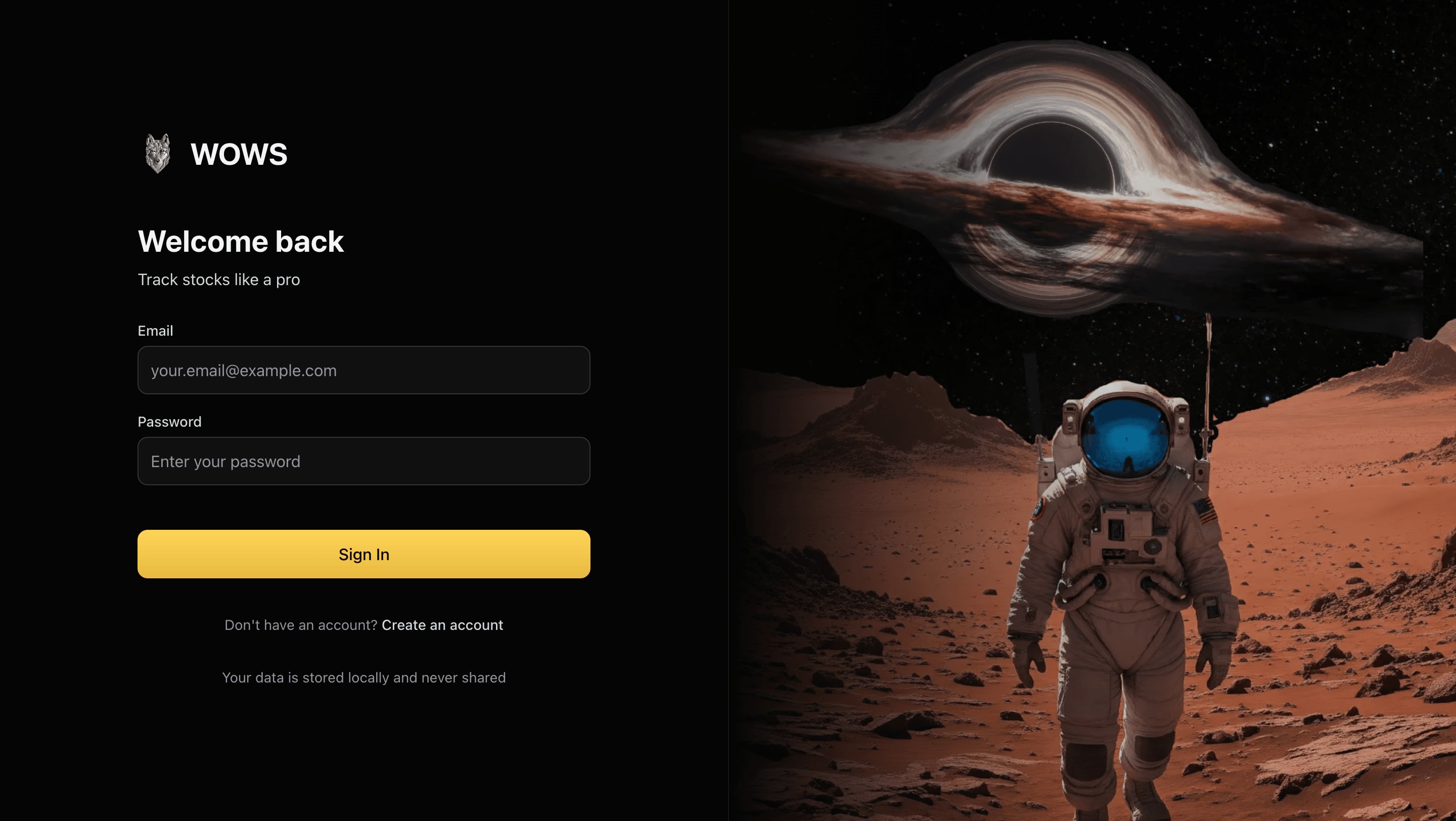
I’ve watched The Wolf of Wall Street, yeah that movie. So when I first imagined building my own market dashboard, that name came to me instantly:
WOWS — Wolf of Wall Street.
The vision was simple but ambitious:
- Two Worlds: One dashboard for stocks, one for crypto.
- Speed: A clean search experience that feels instant.
- Accessibility: A watchlist anyone could use to visualize the market instead of reading boring tables.
I wanted users to type a symbol and immediately see the world's pulse. No noise. Just data.
Reality hits: widgets have limits
At the beginning, I did what most builders do. I used chart widgets. They were easy. They worked—until they didn't.

The moment I searched for a stock outside the US, the screen went blank. Symbols were missing. Markets were unsupported. There were data gaps everywhere. That’s when you stop blaming bugs and start realizing:
This isn’t a frontend problem — this is a system problem.
If I wanted global markets, I couldn’t just "embed" things. I had to build the infrastructure myself. I needed my own backend, my own data pipelines, and a chart that didn't feel like a toy.
And if I cared about charts at all…
There was no going back from TradingView
Anyone who has ever used TradingView knows this feeling. Once you’re used to it, generic charts feel "wrong."
For those of you who may not know TradingView
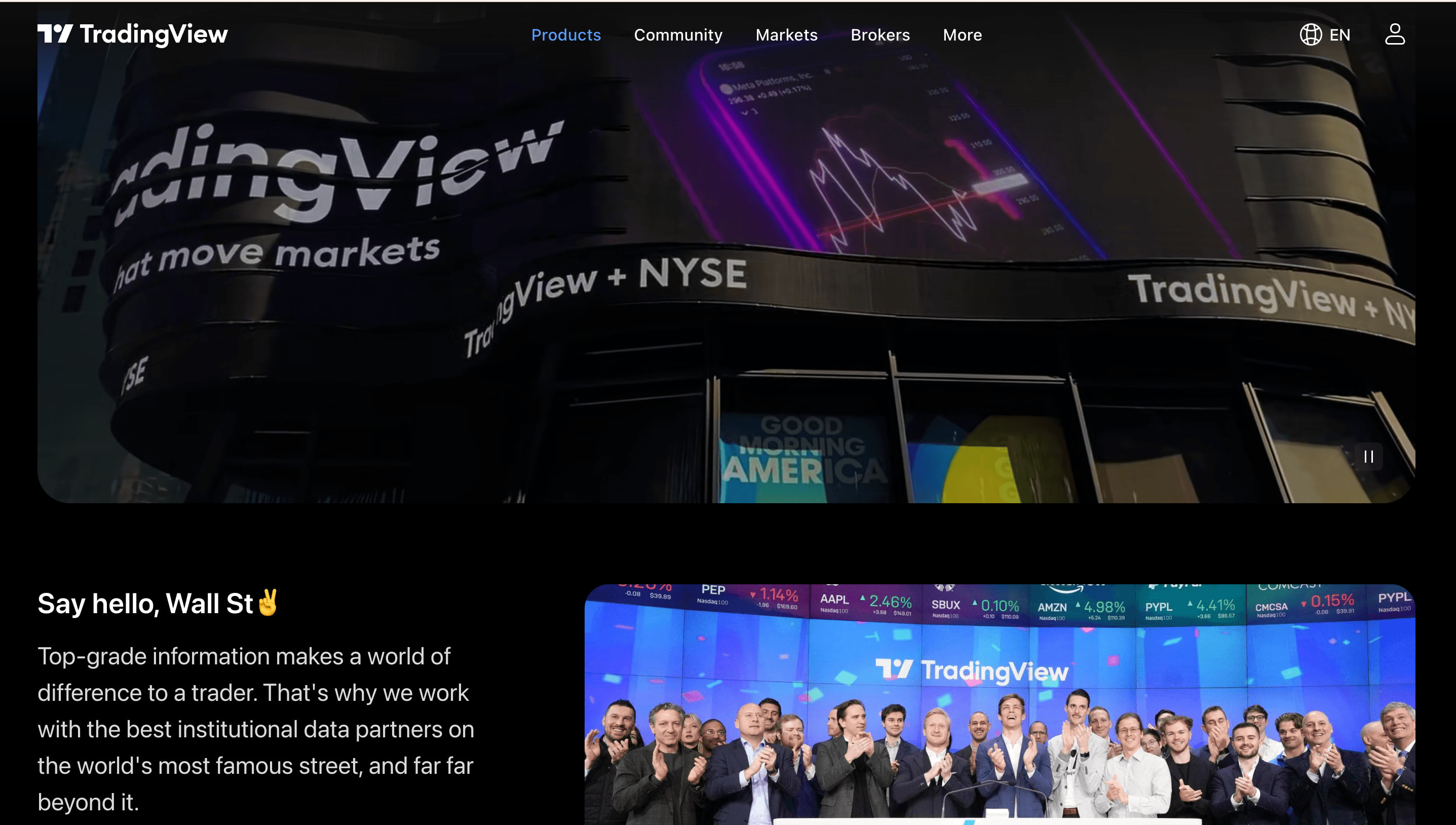
TradingView is widely regarded as the global standard for market visualization. Its engine powers institutional-grade workflows, combining advanced charting with utilities like the Stock Screener for efficiently scanning markets across assets and regions. With granular timeframes, professional indicators, and proven stability, it provides the kind of infrastructure generic libraries aren’t designed to replicate.
But there is a catch: The Advanced Chart Library is a beast. It is heavily protected, legally strict, and intentionally hard to get. Most solo devs never even apply.
Many who do get rejected.
Some people asked me: "Why not just use a lightweight open-source library?" The answer was simple: I don't want "an okay product." I didn't want to explain to my users why a feature was missing. If I was going to build WOWS, I wanted the best foundation in existence.
Applying Anyway: The "Midnight" Chapter
Here is the honest part: I applied knowing rejection was likely. I’m a solo builder, not a VC-backed fintech firm.
I spent nights buried in legal PDFs and paperwork, signing agreements on my phone at midnight, half-joking that I’d wake up to a "no."
Three days later, I got a reply. It wasn't an auto-rejection. It was a conversation. Rita and the TradingView team asked about my timelines, my public access plans, and my compliance. They didn't care that I was a solo dev; they cared that I was serious.
I rebuilt parts of WOWS to meet their standards. I removed forced login walls. I made the dashboards publicly accessible. I separated my AI features to protect the integrity of the data. And then came the approval.
A Solo Builder’s Milestone: The Advanced Charting Era
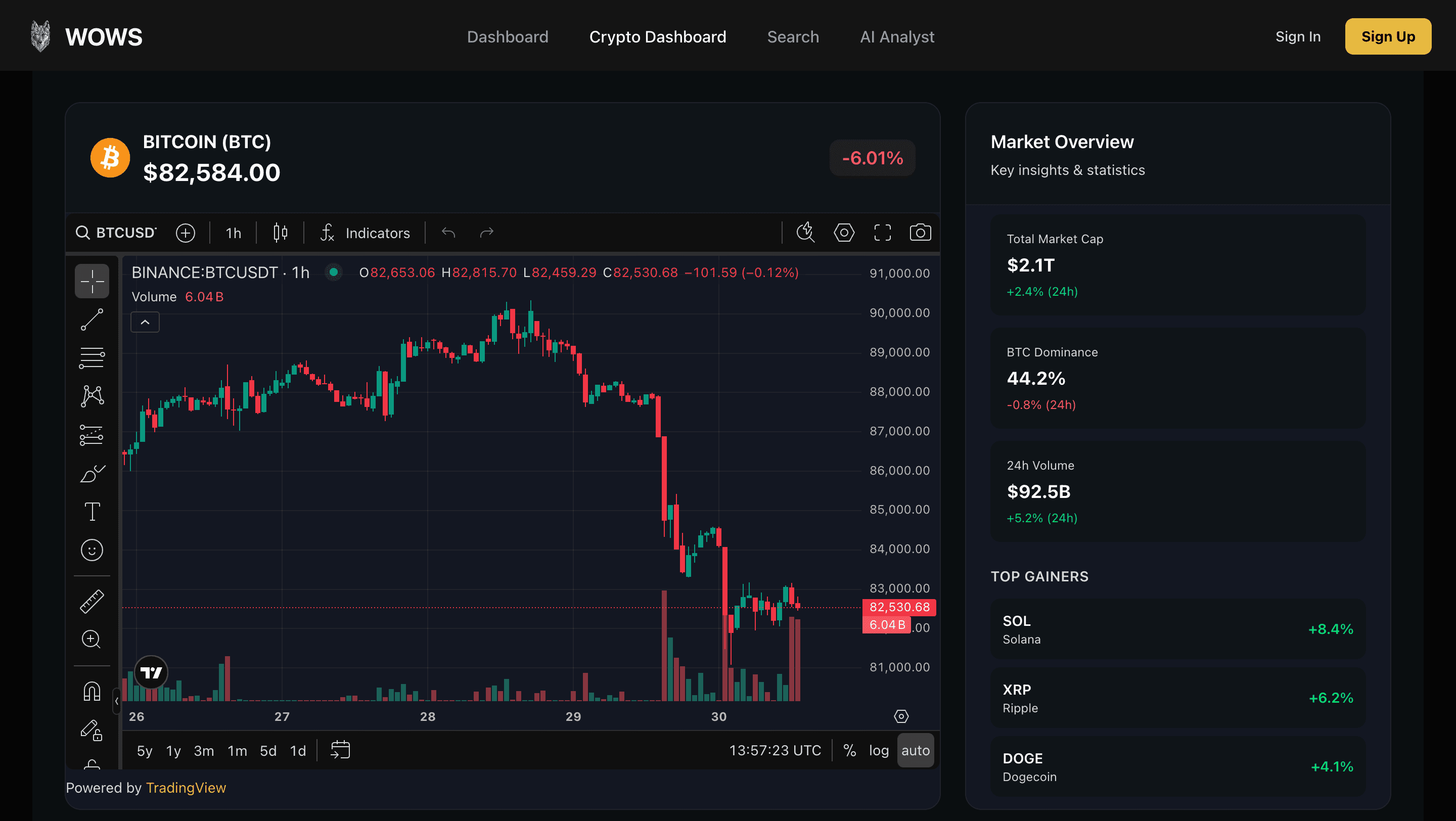 Securing the rights to integrate TradingView’s Advanced Charts transformed WOWS from a side project into a professional-grade platform. This wasn't just a win for the frontend; it was a catalyst for a total backend overhaul. I developed the Waterfall Data Engine specifically to support this new standard. It’s a sophisticated routing system that prioritizes the best available data—tapping into Binance and Polygon first—ensuring that every candle on the chart is backed by the most reliable source possible. It’s the kind of high-stakes system design I used to only dream of building.
It is a system that never says "No Data."
What’s Next for WOWS
Originally, WOWS was going to be a small open-source project. But the moment the Advanced Chart entered the picture, it became something much bigger. It became a public platform built on trust and professional-grade tech.
This isn't just about flexing a logo. It's about a marketer who didn't just talk about dashboards, but built one. It's about a 23-year-old indie builder who refused to settle for "good enough."
Maybe one day this becomes a story when I apply to a major fintech firm:
"Yeah, I once integrated the TradingView Advanced Library as a solo builder because I didn't like the generic version."
For now, it’s just another chapter. Built with stubborn curiosity, late nights, and a refusal to downgrade the dream.
The terminal is live. Welcome to WOWS.
If you’re an indie builder reading this, remember:
Sometimes you don’t get access because you didn’t ask.
I did.
— Shain Wai Yan
"TradingView® is a registered trademark of TradingView, Inc. WOWS uses the TradingView Advanced Charting Library under license. Shain Studio's is not affiliated with or endorsed by TradingView, Inc."

